
Stay Sharp: Your Phishing and Smishing Survival Kit Body
Cybercriminals are getting smarter but so can you. The National Computer Incident Response Team of The Bahamas (CIRT‑BS) has launched the Phishing and Smishing Survival Kit to help you spot
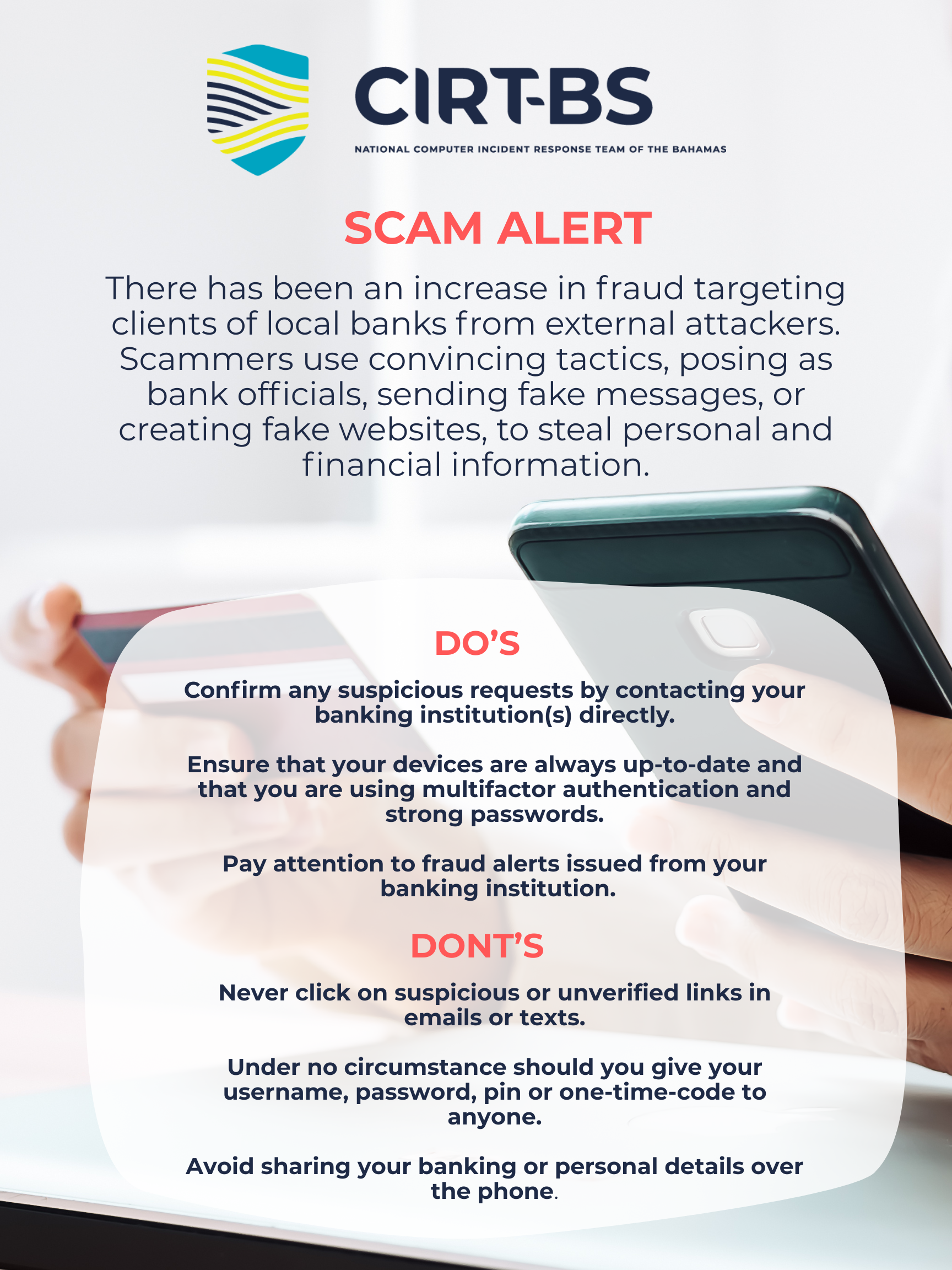
CIRT‑BS Advisory: Beware of Fraudulent NIB Smart Card Renewal Text Scam
CIRT‑BS warns the public about fraudulent messages impersonating the National Insurance Board (NIB). These scams aim to deceive recipients into clicking unsafe links or sharing personal information under the guise
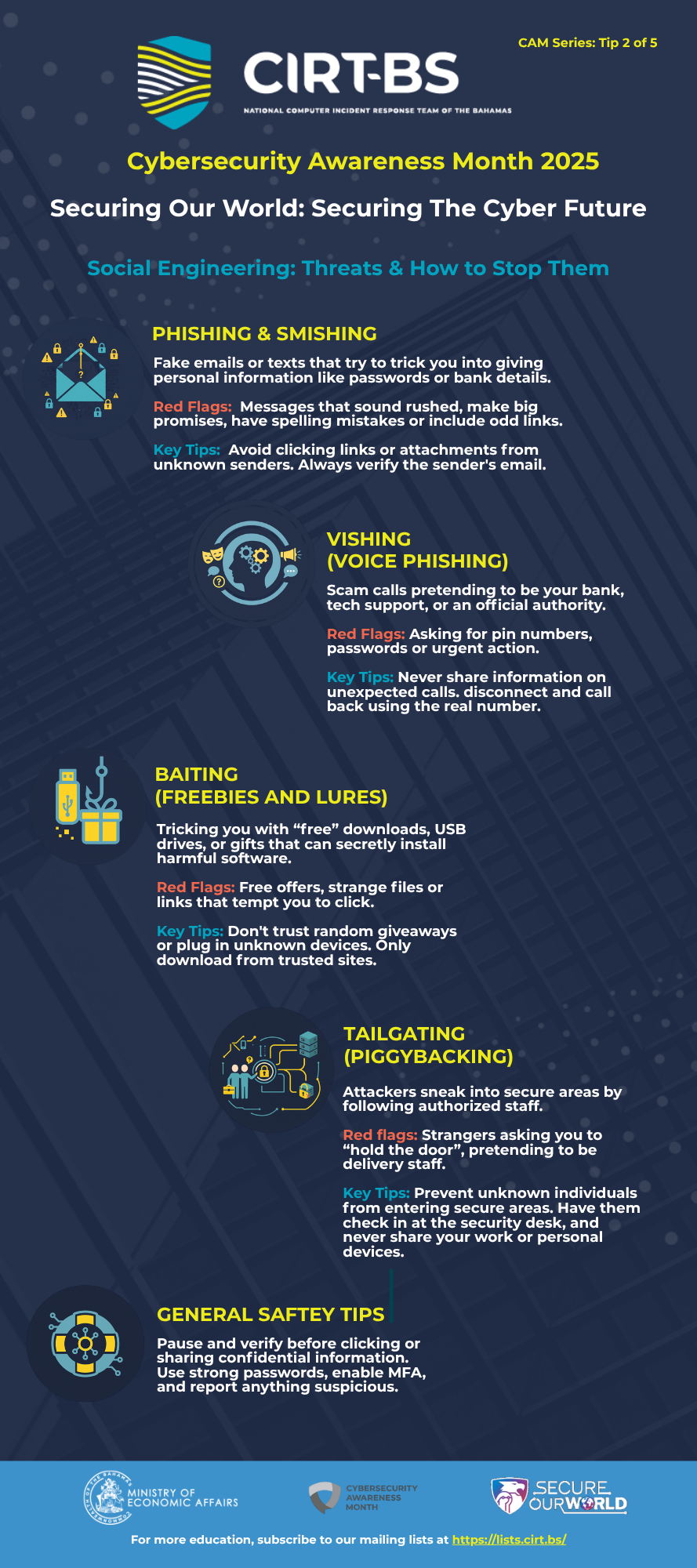
Smishing vs Phishing: Understanding the Dual Threat
Cyber‑criminals continue to evolve their tactics, targeting both mobile and desktop users. Smishing uses SMS or messaging apps to lure victims into clicking fraudulent links or sharing sensitive data. Phishing
Advisory: Fake Traffic Fine Payment Scam
The National Computer Incident Response Team of The Bahamas (CIRT-BS) is aware of fraudulent websites impersonating legitimate government services and attempting to collect fake traffic fine payments. These scams use
Bahamas Election Security Awareness 2026
Daily Election Checklist: Stay Informed. Stay Secure. Verifying information is everyone’s responsibility: Follow updates from official government channels and the Parliamentary Registration Department Rely on verified Bahamian news outlets for
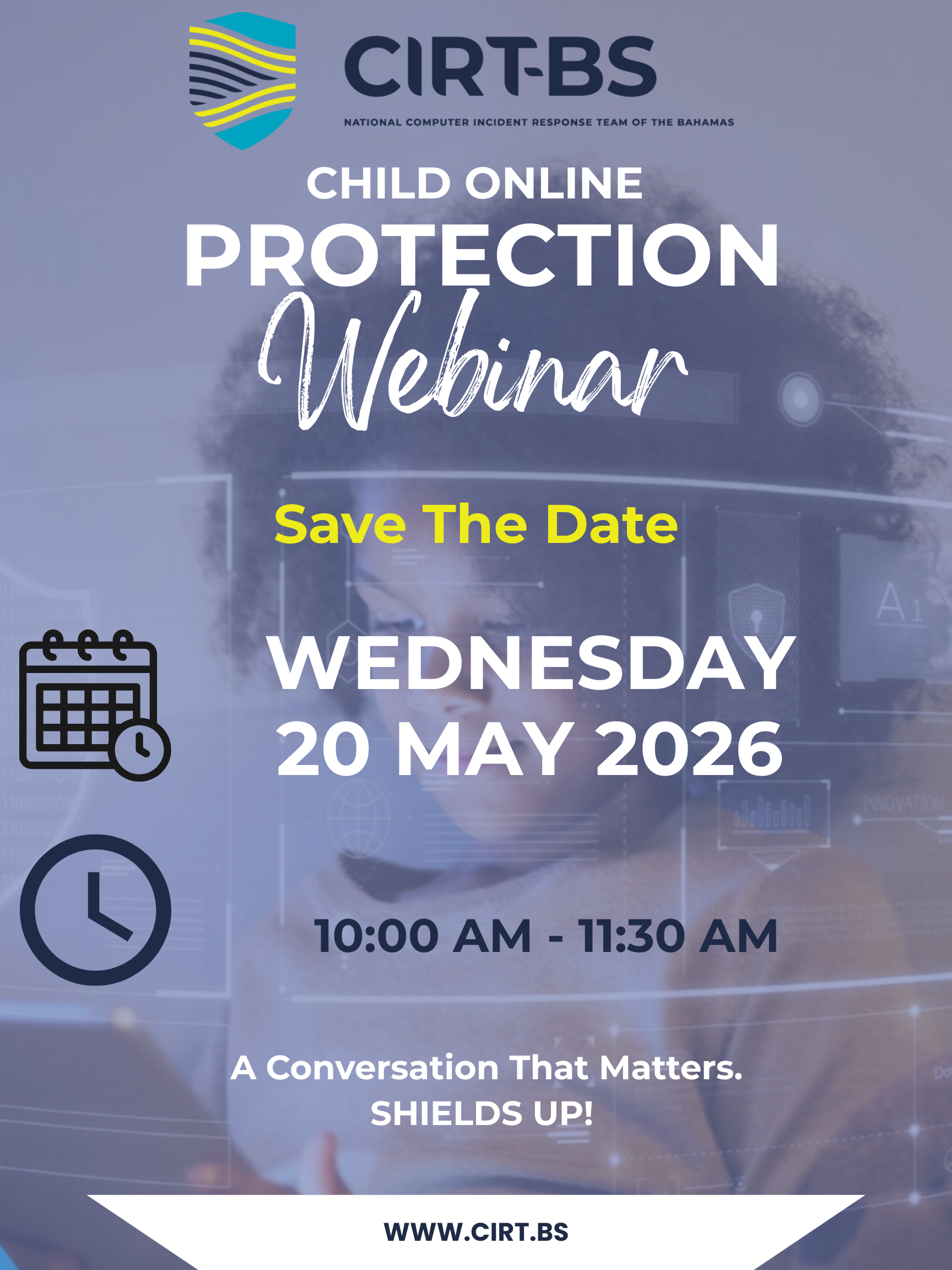
Child Online Protection Webinar: A Conversation That Matters
On May 20, 2026, the National Computer Incident Response Team of The Bahamas (CIRT‑BS) will host the Child Online Protection Webinar, uniting international experts to explore how we can build
Microsoft Security: Windows Server Update Service
ⓘ We are reaching out to let you know that Windows Server Update Service is vulnerable and can be exploited via Remote Code Execution by attacker to gain unauthorized access to critical systems. Attention constituent: A critical vulnerability exists in Microsoft Windows Server Update Services (WSUS) that allows a remote, unauthenticated attacker to execute unauthorized code on affected systems. The issue is caused by improper
Regional Spike in Medusa Ransomware
ⓘ We are reaching out to let you know there has been a sharp rise in Vadir infostealer infections globally, posing a growing threat to your data. Advisory Overview Advisory Type Technical Author Etienne Bowleg Date 16 September 2025 We have observed an increase in ransomware attacks in our region attributed to the Medusa group, one of the most active and aggressive ransomware campaigns currently
Vidar Infostealer Spyware on The Rise
ⓘ We are reaching out to let you know there has been a sharp rise in Vadir infostealer infections globally, posing a growing threat to your data. Advisory Overview Advisory Type Technical Author Emilio Smith Date 15 September 2025 There has been a noticeable increase in Vidar spyware infections affecting systems worldwide. Vidar is a type of malicious software (spyware) that quietly collects sensitive information
New Advisory: Critical SonicWall SSL-VPN Zero-Day Exploit
ⓘ We are reaching out to let you know about a zero-day security vulnerability in Gen 7 SonicWall firewalls that attackers are currently exploiting. Advisory Overview Advisory Type Technical Author Emilio Smith Date 15 August 2025 There is an ongoing threat of attacks from the Akira ransomware group targeting Gen 7 SonicWall firewalls where SSL-VPN has been enabled. This group is exploiting a zero-day vulnerability,
Deepfake Investment Scam Continues to Evolve
ⓘ This advisory is about an ongoing scam campaign containing deepfake video content of senior government officials. The scams are designed to trick you into sharing your personal information or making a payment. Threat actors are creating “copycat” versions of local news websites to make their scams look legitimate, and solicit personal information and payments. They use social media websites like Facebook and WhatsApp to
New Advisory: Fake Investment Scams Using Deepfake Videos
ⓘ This advisory addresses fake investment scams. CIRT-BS is urging the public to stay vigilant as new scams circulate online and fraudulent websites are impersonating local media houses to promote a fake investment opportunity linked to Central Bank of The Bahamas. To boost credibility and traffic, the scammers are using artificial intelligence to generate “deepfake” videos of various news personalities as well as Central Bank
New Advisory: Active Exploitation of Ivanti Vulnerabilities
ⓘ Attackers are targeting Ivanti Connect Secure appliances using known vulnerabilities. Attackers may sometimes maintain persistent, undetected access even after patching systems. Advisory Overview Advisory Type Technical Author Marcus Knowles Date 17 April 2025 Ivanti and CISA recently reported active exploitation of several critical vulnerabilities in Ivanti network access security appliances. UNC5221, a China-linked threat group, uses these vulnerabilities to break into networks, deploy custom
New Advisory: Critical Exploitation of Known Fortinet Vulnerabilities
ⓘ We are reaching out to let you know about ongoing attacks targeting Fortinet devices using known vulnerabilities. In some cases, the attackers can remain undetected even after patching. Attention constituent: Fortinet and CISA recently reported active exploitation of several known vulnerabilities in Fortinet devices. These include switches, firewalls, and other related products, many of which are widely used for secure remote access. Attackers are
New Advisory: Critical Vulnerability Found in Remote Access VPNs
ⓘ Your system could be at risk of being affected by several CVEs targeting SSL VPNs. CIRT-BS is advising that unpatched VPN devices are being actively scanned for vulnerabilities. These include many widely used brands detailed below. The attacks are using previously breached credentials and brute force to bypass weak or misconfigured MFA to access devices and/or deploy ransomware. Advisory Overview Advisory Type Technical Author

Cybersecurity Awareness Month: Enable MFA; Disable the Hackers
Last week, we kicked off Cybersecurity Awareness Month, detailing strong passwords as your first line of defence against a cyber attack; this week, we cover the second: multi-factor authentication (MFA). Multi-factor Authentication adds an extra layer of security by requiring two or more methods of verification to access your accounts. Rather than relying solely on a password, MFA can come in several forms. These include
Cybersecurity Awareness Month: Use a Strong Password + a Password Manager
Cybersecurity professionals always say it, but it’s true: passwords are your first line of defence against data breaches. Because of this, it is crucial to make them strong and difficult to crack. Remember these three keys to make your passwords stronger: Make them long. The longer a password is, the more challenging to crack. CIRT-BS and other industry experts recommend passwords of 16 characters minimum.
Help Secure Our World this Cybersecurity Awareness Month
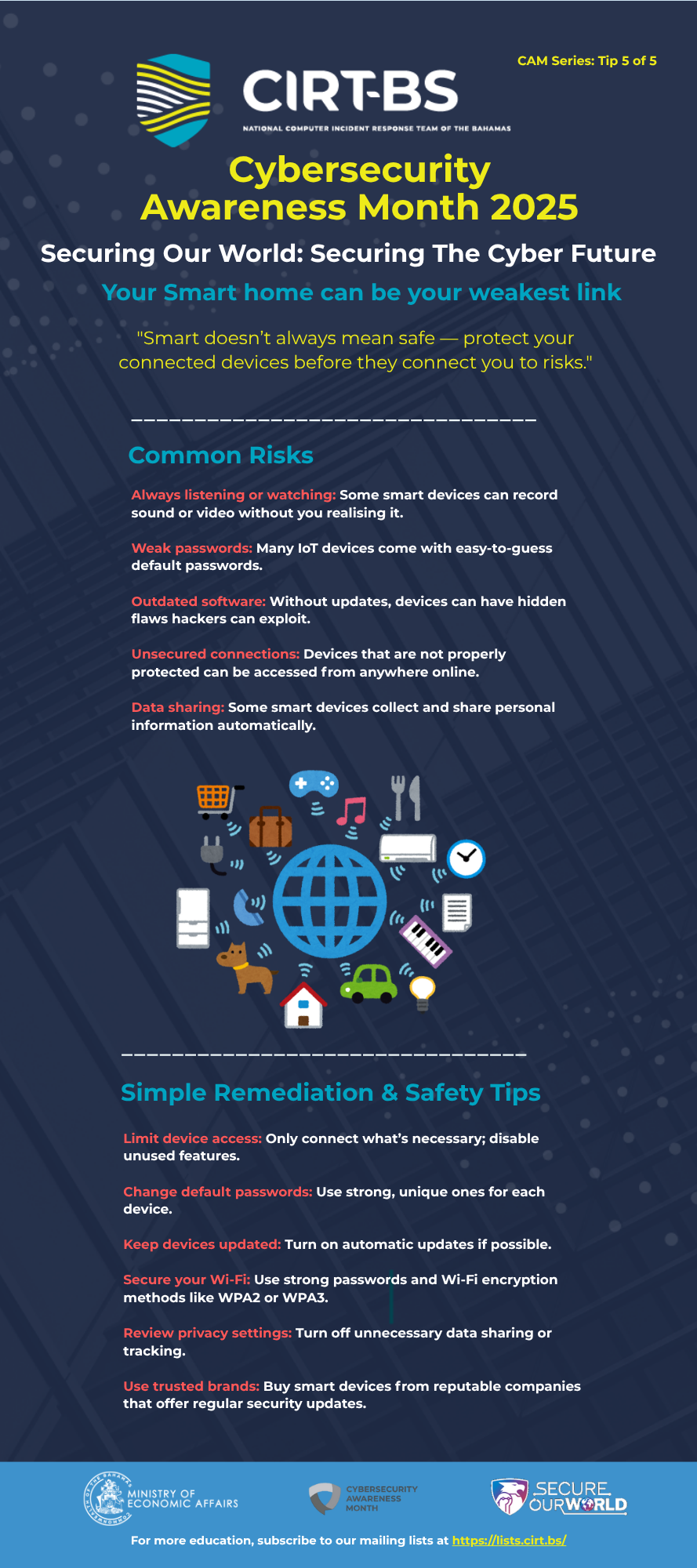
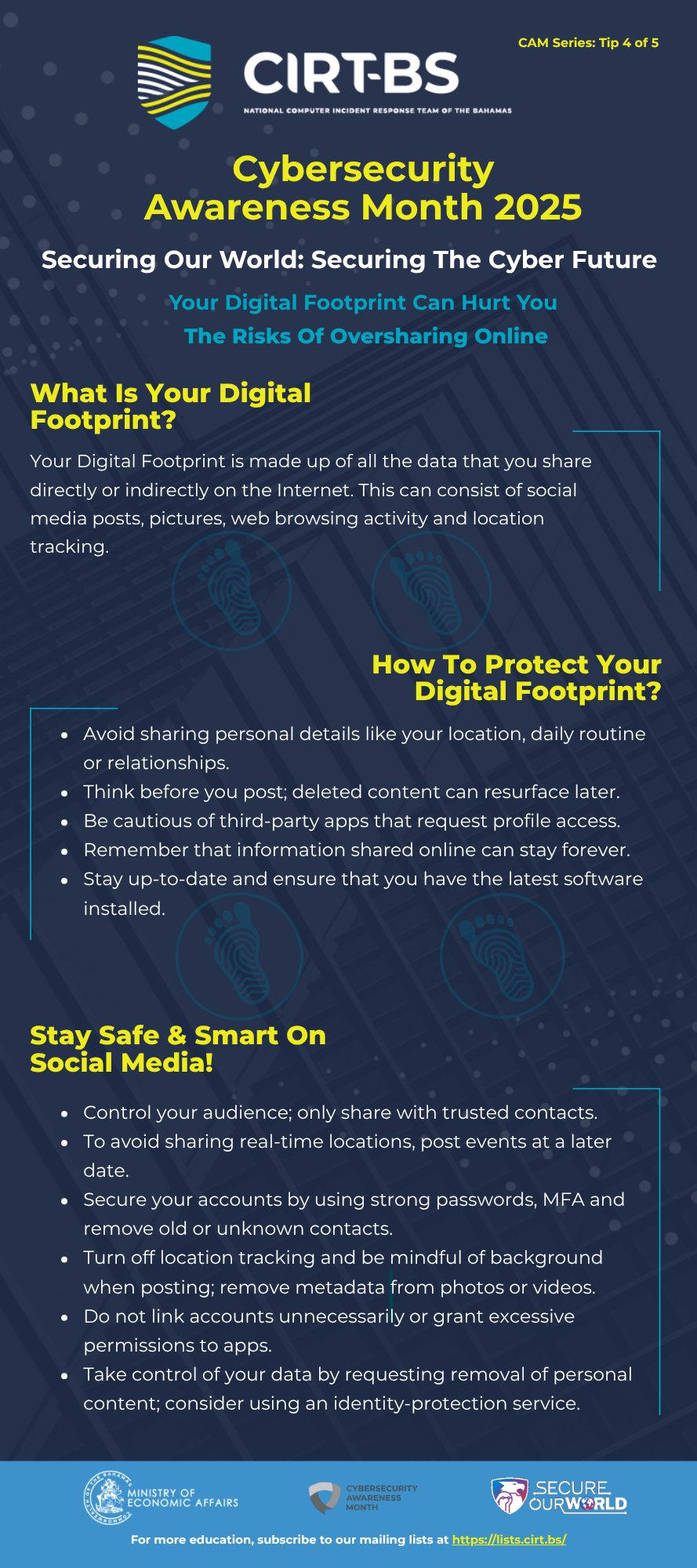
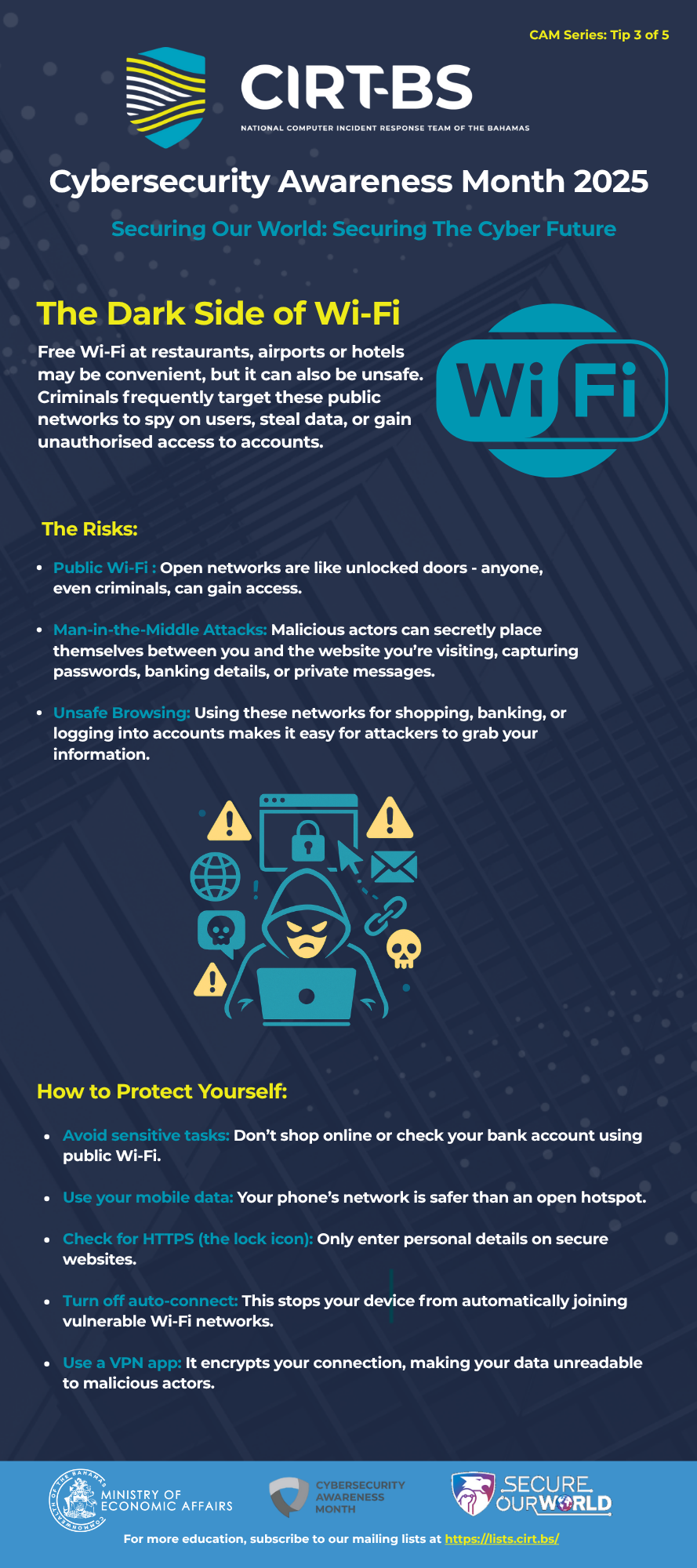
Welcome to Cybersecurity Awareness Month, an international initiative that educates everyone about online safety and empowers individuals and organisations to protect their data from cybercrime. Amidst large-scale data breaches and cyber-attacks, Cybersecurity Awareness Month reminds us about simple, effective ways to remain safe online, protect personal data, and ultimately help secure our world. The National Computer Incident Response Team of The Bahamas (CIRT-BS) is proud

Cash or Card? 10 Tips to Outsmart Card Fraud
In its 2022 Annual Report, the Bahamian monetary regulator, Central Bank of The Bahamas, reported over $15M in fraud complaints from debit and credit card users.[1] In many instances, better handling of financial cards could help to protect potential victims. This article shares ten practical but effective recommendations for protecting your financial accounts through your bank cards. (1) Invest in an RFID-blocking wallet to store
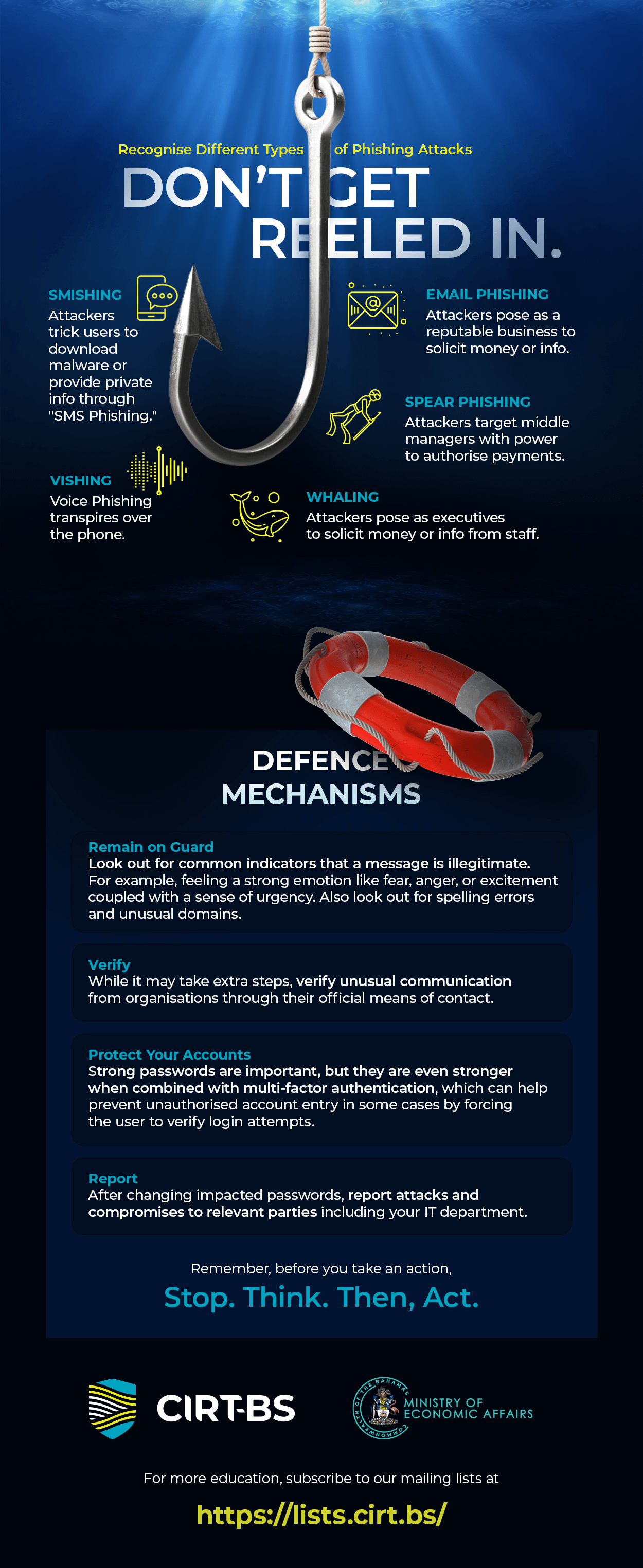
Don’t Get Reeled In! Recognising and Reporting Phishing
Have you ever received an email from a foreigner requesting financial assistance? How about a text message claiming you’ve won a particular prize for a competition you’ve never entered? In cybersecurity, these scams are commonly known as “phishing” attempts. Believed to come from the term “phoney fishing,” the Internet Engineering Task Force defines phishing as a technique for attempting to acquire sensitive data (e.g.
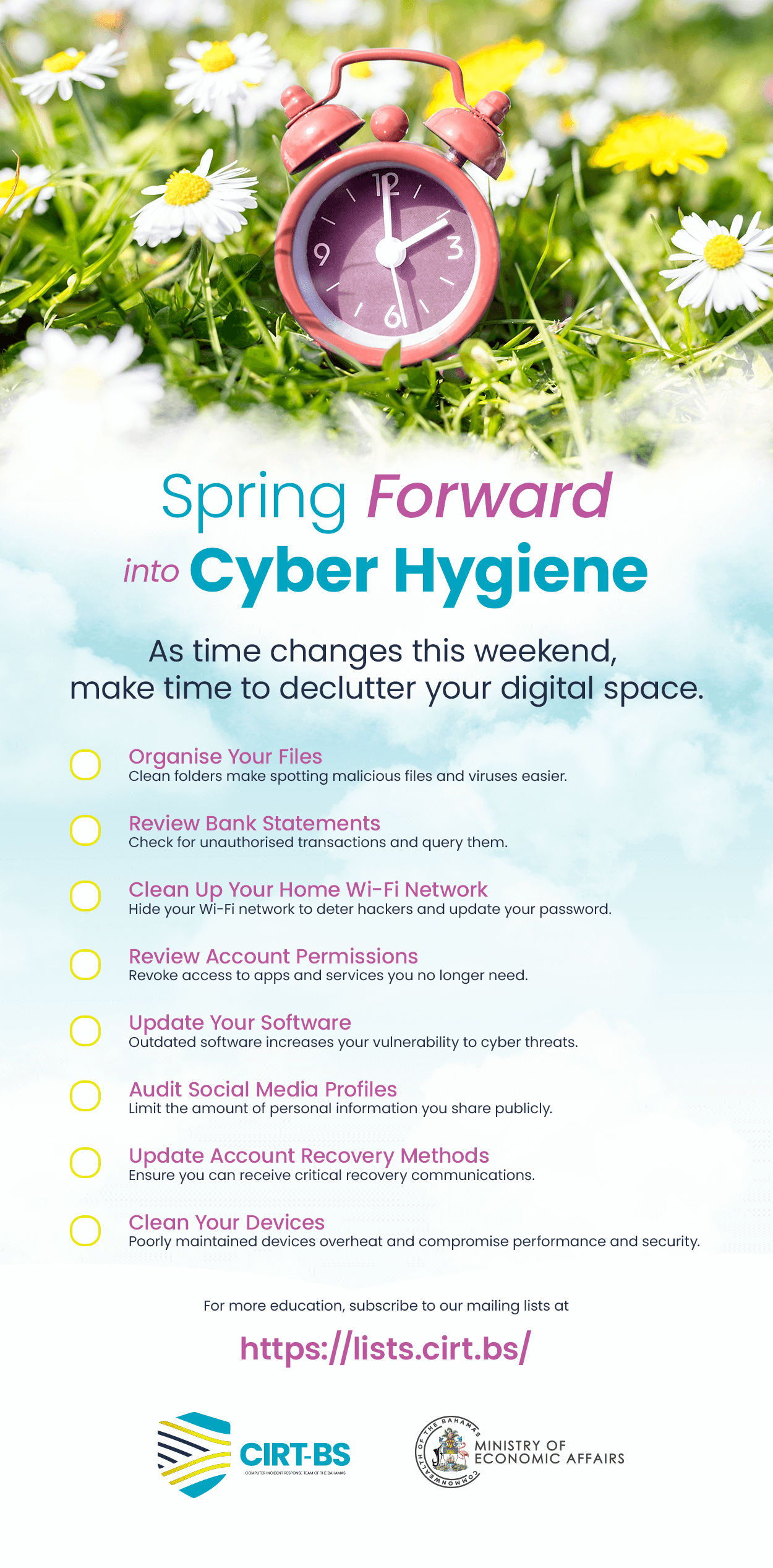
Spring Forward into Cyber Hygiene
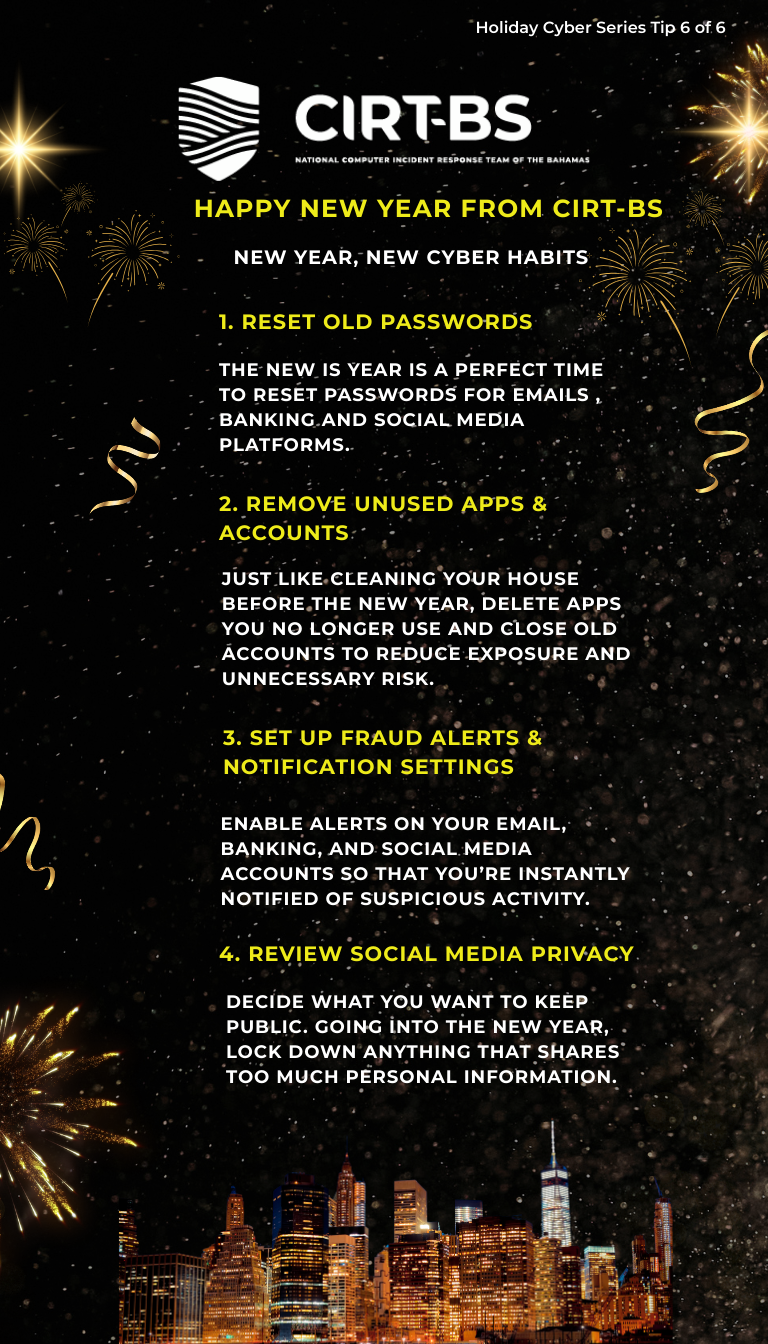
Remember that time changes this Sunday! We move forward one hour. As you take time to update your clocks and declutter your homes this weekend, CIRT-BS reminds you to ensure that your cyber hygiene is being taken care of, too! Organise Your Files Clean folders make spotting malicious files and viruses easier. Review Bank Statements Check for unauthorised transactions and query them.
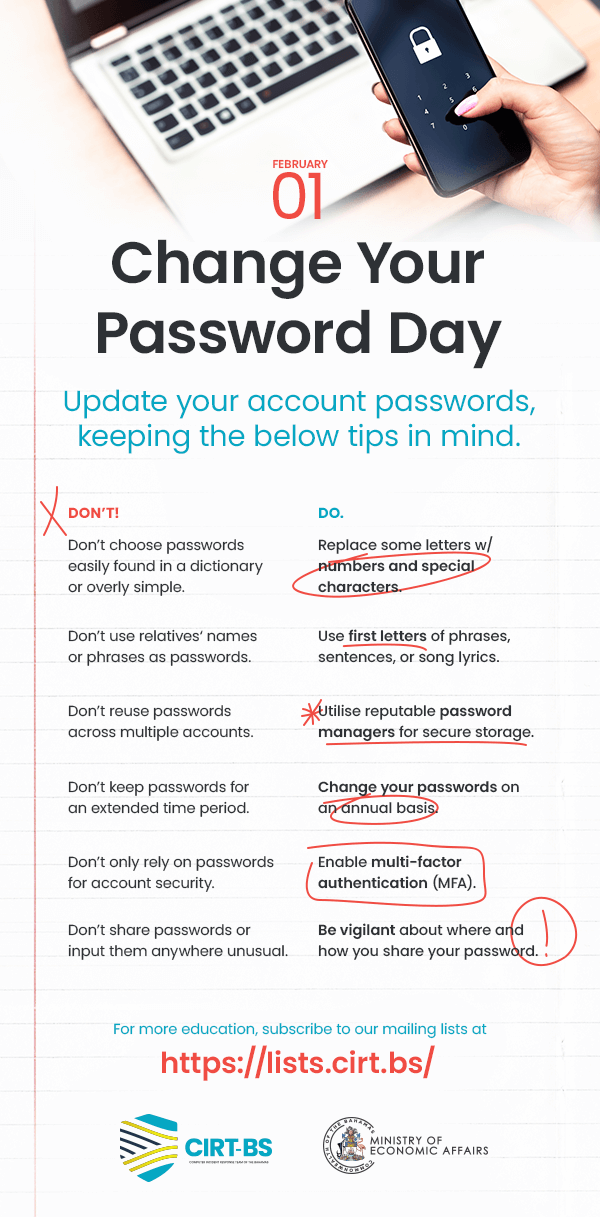
Build Better Passwords for Online Security this “Change Your Password Day”
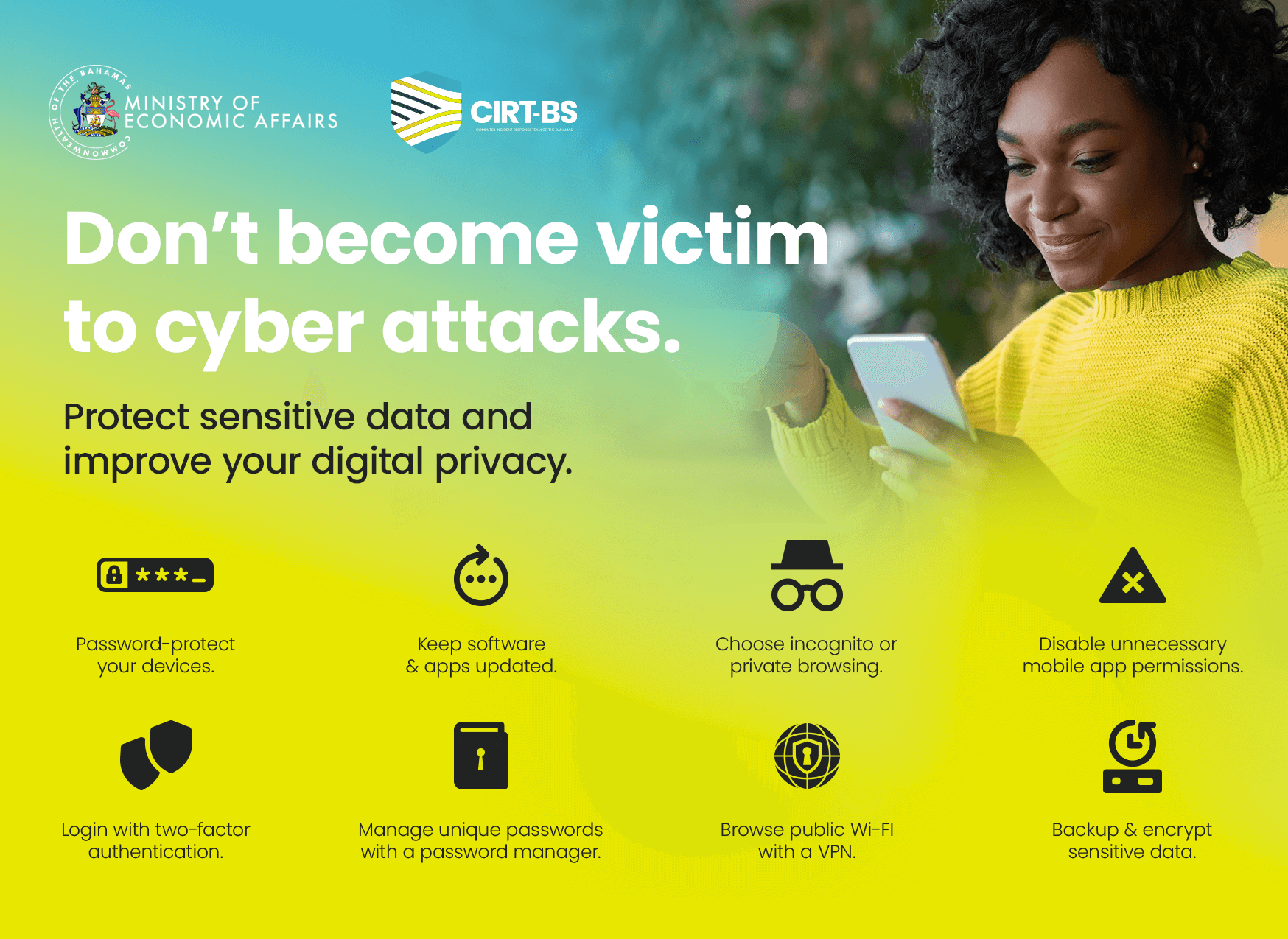
What do your bank, social media, and email accounts share? A password! Passwords are one of the most critical lines of defence against cyber attacks. They help ensure our data is only accessed by authorised users, even in the event of device theft or loss. Many people choose passwords found in the dictionary and reuse them across multiple accounts, meaning that once a cybercriminal has
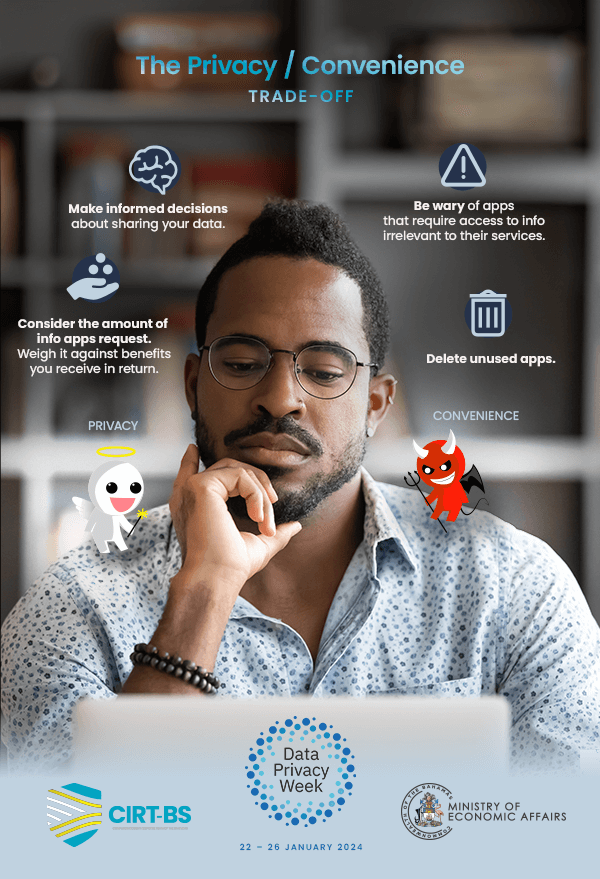
Data Privacy Week: 4 Ways to Protect Your Data
So what’s the big deal about privacy, anyway? When you avoid taking measures to take control of your data, you make yourself susceptible to identity theft, which can lead to several issues, including financial loss and damage to your online footprint. Throughout this Data Privacy Week, CIRT-BS covered topics around practising discernment in sharing specific data with various services and taking action on our decisions through

Data Privacy Week: Get Comfortable with Privacy
We may feel despair about how our data is collected and used by our apps and web services—especially as they often request more data than necessary. But here’s the silver lining, thanks to privacy rules like the GDPR and Data Protection Act: you have some control! Privacy rules help protect us, the users. Websites and apps are now increasing transparency around the info they collect and how
- RFC 2350